 SYNDERESIS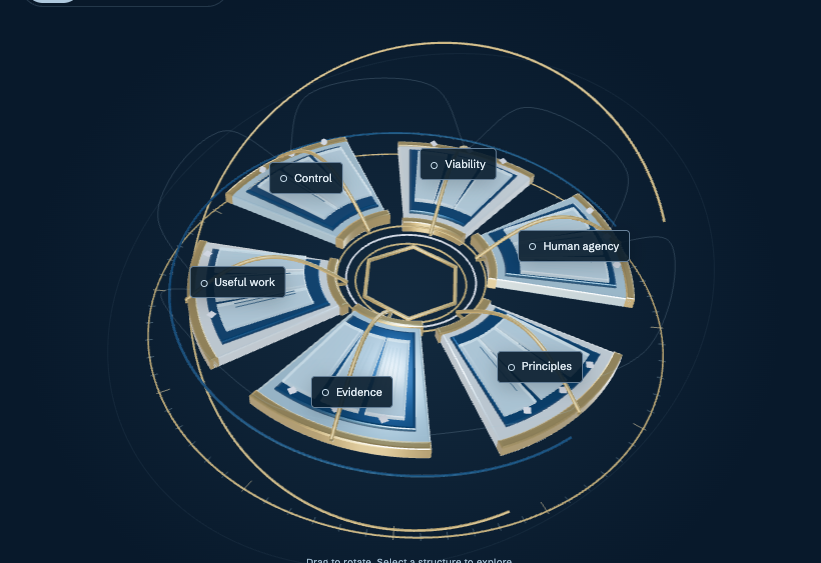
The market, the model and the case for sovereignty
AI that shares your values!
A commercial and technical white paper for founders, institutional decision-makers and prospective partners.
Digital edition · 12 September 2026 · Documentation and planning assumptions as of this edition
Based on the June 2026 Founding Business Guide, revised to distinguish documented product capabilities, philosophical commitments, proposed architectures and planning scenarios.
The proposition: make useful Catholic AI easy to adopt, demonstrate its behaviour rather than merely assert alignment, and develop a sovereign deployment option whose operating arrangements can withstand serious scrutiny.
Synderesis Catholic AI is an independent company and is not affiliated with, endorsed by, or an official organ of the Catholic Church or the Holy See.
1. Executive summary
Catholic institutions and Catholic-led businesses do not need another technology project simply because AI exists. They need help with recurring work: correspondence, multilingual communication, research, grant applications, document review and routine enquiries. The commercial opportunity is to make that assistance fit their convictions, working practices and obligations, without requiring every user to become a prompt engineer or every institution to commission an integration programme.
The June guide identifies a compelling intersection: Catholic alignment, operational usefulness and European control. This white paper retains that thesis. It also makes the distinction that turns a positioning claim into a defensible business: which parts exist today, which are supported by evidence, and which require investment and verification.
The current public offer includes a browser workspace, account-scoped API access, a one-time free allowance and a subscription. Customer Agent and private-deployment opportunities are presented as organisational offerings to discuss; the public pages do not establish that every proposed enterprise configuration is ready to procure.[1][3] The current privacy notice explicitly describes external model providers and possible processing outside the European Economic Area (EEA). It therefore does not support describing today's public service as a wholly EU-only inference system.[2]
That distinction does not weaken the sovereignty strategy. It defines the delivery work required to earn it. A separate target architecture can use licensed open weights, EU-controlled operations and a verified processing chain. Its commercial value depends on the buyer's actual jurisdictional and confidentiality requirements, not on a server-location badge alone.
The original global TAM of USD 2–6 billion annually, European SAM of EUR 400 million–1.2 billion annually, and 36-month recurring-revenue scenarios of EUR 0.5–8 million remain in the paper as founder planning estimates. They are not measured market totals or company forecasts. Sections 11–13 supply definitions, arithmetic, sensitivities and a customer-mix model that make those estimates challengeable and useful.
Recommended commercial sequence: improve the working assistant; win repeatable, low-sensitivity workflows; qualify institutional pilots and a sovereign deployment path; then expand integrations and regulated-sector work through partners. Measure repeat usage, review effort, retention and cost to serve before treating enthusiasm as demand.
2. The opportunity: useful work, credible trust
The addressable problem is more specific than “Catholics might use AI.” A small office may have too much correspondence for its staff, an international order may repeat the same work across languages, and a charity may hold the information for a grant application across inconsistent notes and reports. In each case, the buyer needs an acceptable result and confidence in the process used to produce it.
The June guide's strongest insight is the activation moment: the first useful result that feels appropriate to the user's work and values. Retain that as a product hypothesis, not a proven conversion mechanism. A firm but charitable supplier email, an accurate parish notice or a grant outline with missing evidence identified is more convincing than a generic demonstration of model capability.
The Catholic position should be explicit. It is not a decorative writing style or a claim that a machine has a conscience. Antiqua et nova distinguishes functional AI performance from the intelligence of the whole human person and frames technology in relation to dignity and the common good.[4] Synderesis can apply that distinction commercially: let software assist the work while people remain responsible for decisions, relationships and authoritative teaching.
The name and its philosophical foundation
Aquinas describes synderesis as a habit concerning the first principles of practical reason.[14] His account of natural law identifies doing and pursuing good, and avoiding evil, as its first precept.[15] Synderesis uses that tradition as a design orientation for a human-directed tool. The name does not attribute conscience or moral agency to software.
Three promises that require three kinds of proof
- Catholic alignment: documented source and conduct policies, appropriate treatment of people, and evaluations covering difficult as well as ordinary requests.
- Operational usefulness: task completion with acceptable review effort, in the user's language and format, measured against the user's actual alternative.
- European control: a documented operator, provider chain, processing locations, access arrangements, key management and applicable legal obligations.
3. Products and packaging: current offer versus expansion
The original four-product structure remains useful. It describes different ways to reach recurring jobs without prematurely building every integration a prospect requests. What changes is the status attached to each product.
| Product | Customer job | Status and development implication |
|---|---|---|
| A · Assistant | Draft, research, summarise and work through questions in a browser. | Public workspace and access plans are documented. Prioritise quality, onboarding, retention and bounded usage rather than rebuilding a product that already exists.[1][3] |
| B · Customer Agent / widget | Answer approved website enquiries and hand difficult cases to a person. | Preserve as a commercial product line. Validate the exact installation, knowledge, escalation and operator-review contract in each proposed deployment; do not infer all June widget features from a marketing page.[1] |
| C · Institutional document workspace | Find and use approved internal material with permissions and provenance. | Retain as an institutional growth product. Current transient attachments are not proof of a persistent, tenant-isolated document repository with deletion of chunks, embeddings and backups.[2] |
| D · API | Integrate assistance into a publisher's or organisation's own service. | Public account-scoped API access is documented. Scope integration work, data handling and service commitments separately.[1][3] |
Spark, Pro and Labora are the current interface's modes for fast conversation, deeper reasoning and bounded work. They are not substitutes for the A–D commercial segmentation above, and their names do not establish a particular underlying model or deployment guarantee.[1]
Preserve the price architecture without confusing it with today's tariff
The June guide proposed EUR 9–15/month for a solo assistant, EUR 19–29/user/month for teams, and EUR 29–99/month for a widget or small document workspace, with custom institutional agreements and mission pricing. These remain price-testing hypotheses, not available plans or validated willingness to pay.
The published self-service offer is different: a one-time free allowance; EUR 1 for an eligible first subscription month, then EUR 5/month; usage credit and optional subscriber top-ups. Consumer prices include applicable EU VAT.[3] A white paper should retain both records: the current entry offer and the proposed higher-value organisational tiers. Institutional pricing must earn its premium through delivered controls and value, not simply attach a larger number to the same account.
4. The buyers: institutions and the people doing the work
A segment is not a sales conversation. Identify the person with the recurring task, the person who approves spend, and the person who can stop deployment. The following are buyer hypotheses inherited from the guide, not customer references or universal descriptions of Church governance. Confirm authority locally.
| Segment | Likely champion and approver | First useful workflow and conversion test |
|---|---|---|
| Dioceses and chanceries | Communications lead or chancellor; administrator and episcopal authority; IT/privacy review. | A bulletin or administrative letter that preserves approved facts and voice. Does it reduce review effort without creating a new reputational burden? |
| Religious orders and congregations | Provincial secretary or bursar; superior and local governance. | A circular across communities and languages. Does terminology remain faithful to the order's approved material? |
| Schools, networks and universities | Principal, registrar or central-office lead; network leadership, IT and privacy staff. | A staff-facing newsletter or policy draft using non-sensitive material. Avoid treating adoption as permission to upload pupil records. |
| Charities and development bodies | Fundraising or programme officer; director, finance and trustees. | A grant outline that identifies evidence gaps rather than inventing beneficiary outcomes. Can staff verify every substantive claim? |
| Healthcare and care organisations | Administrative or communications lead; CIO/CISO, privacy and clinical governance. | Public visitor information or non-clinical administrative drafting. Patient-data and clinical uses require a different evidence and compliance bar. |
The bishop, superior, trustee or governing board may never use the interface. Their decision is whether the proposed use preserves responsibility and the institution's reputation. Give them a short account of the task, data boundaries, review owner, escalation and stop conditions—not a promise that embarrassment is impossible.
Likewise, do not treat a technical or privacy buyer as an obstacle to be bypassed. Their questions specify the product that can actually be approved. A mission-aligned champion without authority, a concrete task or a viable data path is a relationship to develop, not a signed opportunity.
5. The buyers: the long tail and specialised channels
The original distinction between Catholic-identity businesses and businesses owned by practising Catholics is commercially important. One may want the product to reflect a public brand; the other may value it privately while serving a general audience. They need different messages, not different standards of honesty.
| Segment | Buyer hypothesis | Useful entry and boundary |
|---|---|---|
| Catholic-goods shops and identity-led services | Owner or small support team; brand fit is explicit. | Product enquiries and correspondence. Approved catalogue facts should govern recommendations; do not invent availability, devotional claims or fulfilment promises. |
| Ordinary Catholic-owned businesses | Owner combines user, budget and technical roles. | Supplier emails, quotations and summaries. Sell low-friction usefulness, not a requirement to adopt an entire office suite. |
| Lay movements and associations | Communications or formation lead; national or local leadership. | Appeals, newsletters and multilingual coordination. Member records and formation authority still require clear ownership. |
| Catholic media and publishing | Editor, production lead or digital team. | Drafting, translation and an API-supported reader service. Rights clearance, editorial control and theological terminology are central. |
| Pontifical and international Church bodies | Administrative, academic or library champion; formal governance. | A tightly scoped research or administrative pilot. Prestige is not a near-term revenue forecast and implies no endorsement. |
| Foundations, pilgrimage and professional guilds | Small secretariat, venue operator or professional network. | Grant reporting, public visitor information or member communications. Treat seasonal demand and specialist obligations explicitly. |
“Marek”, the Kraków shop owner in the original guide, is best used as an illustrative persona—not a testimonial. His supplier-dispute workflow captures a plausible promise: turn rough notes into a clear, fair draft that he can check and send. It does not establish a measured ten-second response time or a guaranteed sale.
For every segment, track a specific activation event and a subsequent repeat-use event. A successful demonstration is not evidence of sustained adoption. The higher the review burden or data sensitivity, the more the decision depends on controls and institutional approval rather than on the fluency of a sample answer.
6. Workflows that make the promise concrete
These are illustrative workflows, not measured customer outcomes. Their purpose is to define product tests and useful demonstrations.
A supplier dispute: assertive without damaging the relationship
An owner provides delivery facts, the remedy sought and a preferred tone. The assistant drafts a courteous but firm email. The owner checks quantities, dates and commercial commitments, then sends it through the ordinary email system. Success means an acceptable draft with limited revision—not an automatic refund or a claim of legal entitlement. Do not include unnecessary personal information or credentials from the supplier account.
A school or parish notice: facts first, house voice second
A staff member supplies approved dates, contact details and a short style example. The assistant produces a notice and, if requested, a translation. A responsible staff member verifies arrangements and a competent language reviewer checks important translations. Named pupil situations or confidential pastoral cases do not belong in a routine demonstration. The workflow should make missing details visible rather than silently completing them.
A grant application: a claim-to-evidence map
A charity starts with the funder's criteria, a permitted project description, verified costs and existing results. The assistant creates an outline linking each requested claim to supplied evidence and flags gaps. Staff supply missing information and approve the final narrative. Never invent beneficiary stories, impact figures, partner commitments or a budget merely to make the application look complete. Record eligibility and submission decisions separately from drafting assistance.
A publisher or religious order: terminology and authority
A publisher supplies material it may lawfully process, a terminology list and the intended audience. The assistant drafts or translates; editors check theological terms, quotations, rights and meaning. For an order's procedural query, approved constitutions or policies should be distinguished from general Church sources. The responsible person resolves ambiguity; the model does not acquire authority from being able to cite a document.
Across these examples, evaluate the same chain: permitted input → useful draft → evidence check → human decision. Measure time spent reviewing as well as time spent generating. Include failed and abandoned attempts in the account of usefulness, not only successful demonstrations.
7. The competitive case: win on a demonstrable combination
The June guide's competitive argument should remain central, but not depend on a claim that every alternative is incapable, insecure or literally value-neutral. The relevant question is whether a particular alternative can meet the buyer's task, Catholic requirements, operating constraints and total cost with acceptable effort.
| Alternative | What the evidence establishes | The Synderesis question to test |
|---|---|---|
| Microsoft 365 Copilot | Microsoft's current business offer includes work-context features, connectors, agents and security controls; the business add-on requires an eligible underlying plan.[7] | Can a standalone, Catholic-oriented workflow serve a small office more simply? Compare the buyer's incremental cost and existing licences, not a universal “Microsoft tax”. |
| ChatGPT Business / Enterprise | OpenAI states that business and API data are not used for model training by default and describes retention and security controls.[10] | Does Synderesis add enough Catholic source discipline, workflow fit and accountable deployment choice? “US provider” and “trains on all business prompts” are not equivalent claims. |
| Magisterium AI | Its current site offers Catholic answers, research and writing-oriented experiences. The product's examples include lessons, letters and summaries—not only devotional lookup.[8] | Can Synderesis prove a distinct advantage in operational workflows, local institutional material and a chosen deployment arrangement? Do not assume the operational boundary is uncontested. |
| Mistral | Its current product page describes a general-purpose assistant/agent and enterprise private-cloud or on-premises options.[11] | Catholic-specific evaluation and institutional usability must earn the distinction; European hosting alone is not unique. |
| Existing systems, manual work or no AI | The guide's most useful baseline: the office suite, specialist system, staff member or workaround the buyer already uses. | Is the result worth changing a working habit, including training, checking, permissions and support? |
Pricing comparison discipline. The June comparison anchors—Copilot all-in USD 34–43, ChatGPT Team USD 25–30, Mistral around 15 and Catholic consumer tools around 4—are retained as historical planning notes, not verified current quotations. The latter two figures did not specify currency in the source paragraph. Re-price by country, currency, tier, tax, licence prerequisite and billing term before using them in a sales claim.
The strongest proposition is positive: Catholic convictions made explicit, useful work made easier, and a processing arrangement the buyer can examine. Its defensibility must be earned through evaluations, product quality, relationships and delivery—not asserted through a “nobody else” statement.
8. Sovereignty: the strategic case and the architecture
The distinction between data residency and legal or operational control is essential. The US Department of Justice explains that providers subject to US jurisdiction may be required to disclose responsive data in their possession or control regardless of storage location; it also describes jurisdiction and corporate control as legally bounded and fact-dependent.[9] A European server address is therefore not, by itself, an answer to the buyer's sovereignty question.
An EU-controlled operating company can reduce certain structural dependencies. It does not, merely by incorporation, prove that no foreign legal demand can apply or that no foreign provider handles data. Review corporate relationships, service providers, remote administration, keys, backups, telemetry and support access. Sovereignty is an operating arrangement to demonstrate, not immunity from law.
The sovereign option should run appropriately licensed open weights within a verified EU-controlled processing chain and avoid external inference for the protected workload. Model provenance, operator control and model quality are different questions. Downloading weights does not eliminate obligations concerning their licence, security or suitability.
The June guide's “never call a vendor-hosted model API” rule is retained as a design constraint for that sovereign option. It is not an accurate description of the current public service, whose notice identifies external model providers and possible international transfers.[2] Maintain two clear propositions until the sovereign option has passed its own technical, contractual and operational checks. Do not use the target to misdescribe the present, or the present to abandon the target.
9. Data control and a regulatory calendar that matters
Religious beliefs, health information and other special categories require additional care. The European Commission explains both the need for a lawful basis and additional conditions for sensitive data; valid consent has substantive requirements and is not simply a tick-box.[6] An institution's obligations do not disappear because its chosen supplier has a Catholic identity.
Current retention boundaries are not a sovereignty certificate
The current Synderesis notice describes bounded browser-local history, request-scoped attachments, optional memories, separately retained shared snapshots, account/usage records and provider processing. Ghost mode prevents saved chat in that mode; it does not mean offline inference or that no provider processes the request. Assistant output may reproduce material from supplied context and then be retained like other completed text.[2]
For a persistent institutional document product, require a distinct retention design: originals, extracted text, chunks, embeddings, citations, generated answers, backups and logs each need an owner and a deletion rule. A transient upload feature is not proof that this persistent repository already exists.
The calendar is retained—and tied to the actual use case
The Commission's current AI Act explanation records the general application date of 2 August 2026, with important exceptions, and extended dates of 2 December 2027 for Annex III high-risk use cases and 2 August 2028 for high-risk systems embedded in regulated products. The explanation reflects the 2026 AI Omnibus changes.[13] These dates are planning inputs, not a reason to postpone present GDPR, security or professional obligations. Classification depends on intended use; a drafting tool and an admissions, employment or clinical decision system cannot be treated as interchangeable.
The guide's certification priorities also remain: examine ISO/IEC 27001 for information-security management and, where relevant, C5 and HDS in sector-specific procurement. Their applicability and scope need specialist verification; a hosting partner's certificate does not automatically certify Synderesis or every customer workflow. No such certification is claimed in this paper.
Practical approval package: data-flow record, processor/subprocessor details, access controls, lawful-basis assessment, applicable transfer arrangements, deletion evidence, incident route, use-case classification and a named human review owner. A high-sensitivity prospect without that package is a gated opportunity, not a near-term promise.
10. Market evidence: the institutional base
The market case belongs in the white paper. Its first layer is the size and nature of the institutions that could benefit; its second is the much smaller group that can be reached, approved and served profitably.
Fides's 2025 statistical dossier, drawing on the Church's statistical yearbook, reports population/Catholic data at June 2023 and other institutional data at December 2023. These are not counts measured in 2026.[12]
| Global anchor | Figure | Interpretation |
|---|---|---|
| Baptised Catholics | 1,405,454,000 | Population context, not an addressable customer count. |
| Kindergartens | 74,550 | Institutional activity; not necessarily distinct purchasing organisations. |
| Primary schools | 102,455 | Institutional activity, subject to network/order overlap. |
| Secondary schools | 52,085 | Institutional activity, not assumed independent contracts. |
| Combined school categories | 229,090 | Arithmetic sum of the three published school categories. |
| Charity and healthcare centres | 103,951 | A broad operating footprint with different data and procurement requirements. |
| Hospitals | 5,377 | A subset of the preceding total, not additional to it. |
| Homes for elderly, chronically ill or disabled people | 15,566 | Also a subset; do not count it twice. |
The June guide additionally recorded roughly 3,172 ecclesiastical jurisdictions, about 1,358 higher-education institutions, approximately 23,000 European Catholic schools and 8.6 million pupils, plus Caritas and business-association network figures. These remain in the inherited-anchor register accompanying this paper. Their exact scope, date and current source reconciliation are not established by the Fides figures above. Keep them available for analysis, but do not silently promote them to verified contemporary totals.
A diocese, religious order, school network and its individual schools can describe overlapping buyers. Deduplicate by economic buyer before pricing seats or contracts. Likewise, neither global Catholic population nor an association's membership establishes willingness to pay. The institutional footprint justifies investigation; prospect-level qualification and purchase behaviour establish the commercial opportunity.
11. TAM, SAM and SOM: retain the ambition, expose the method
TAM means total addressable market; SAM is the serviceable available market; SOM is the serviceable obtainable portion over the planning horizon. The original ranges remain useful strategic hypotheses when their units, geography and uncertainty are explicit.
TAM: USD 2–6 billion per year. Define the intended worldwide category as paid AI assistance for Catholic-affiliated institutional and business workflows, not all Church expenditure or all spending by Catholics. The original guide does not supply an auditable spending dataset that independently establishes this range. Retain it as a top-down hypothesis to test.
SAM: EUR 400 million–1.2 billion per year. Define a serviceable European market through sector, workflow, language, data requirements and delivery capability. “European” is not identical to EU/EEA: Switzerland, for example, needs explicit treatment. A serviceable market must exclude configurations the company cannot yet deliver and buyers requiring unavailable controls. Do not turn every sensitive-data institution into a presently serviceable customer.
SOM: a 36-month capture scenario. The guide's conservative EUR 0.5–0.9 million, base EUR 1.8–3.0 million and ambitious EUR 4–8 million annual recurring-revenue ranges are preserved. They are not confidence intervals or a time-series forecast. Section 12 shows the customer mix required to reach representative points.
A defensible bottom-up market calculation is: unique eligible buyers × addressable users or workspaces per buyer × annual net recurring value, with separate assumptions for reachability, purchase, retention and overlap. Build country/segment cohorts first, deduplicate networks and affiliates, then reconcile their sum with the top-down range. The highest-value evidence is not another large population statistic: it is a qualified buyer count, a tested price and a delivery cost for a repeatable use case.
12. From customers to revenue
The June guide's revenue ambition needs an explicit bridge from customers to contracts. The following arithmetic preserves its three scenario bands while exposing their reliance on institutional revenue. These are illustrative planning constructions, not observed customers, signed pipeline or forecasts.
| 36-month scenario | Self-service accounts | Institutional contracts | Net annual contract assumption | Annualised recurring-revenue potential |
|---|---|---|---|---|
| Conservative | 500 | 10 | EUR 50,000 | EUR 524,000 |
| Base | 2,000 | 50 | EUR 40,000 | EUR 2,096,000 |
| Stretch | 5,000 | 100 | EUR 60,000 | EUR 6,240,000 |
Each row assumes EUR 4 monthly net recurring revenue per self-service account and no overlap between the two customer categories. Formula: 12 × self-service accounts × monthly net revenue + institutional contracts × net annual recurring contract value. “Net” here excludes VAT; payment, inference, hosting and support costs are considered separately. EUR 4 is a planning input, not a verified realised value from the EUR 5 consumer tariff.[3]
This is a simplified annualised run-rate model. It excludes ramp timing, one-off services, introductory discounts, bad debt, expansion, foreign exchange and any accounting treatment of unused credit. It is not a cash-flow model, valuation or audited ARR statement.
The strategic implication is material: these outcomes do not follow from “a few hundred low-priced accounts” alone. The base construction requires fifty recurring institutional contracts, and the stretch requires one hundred at a demanding contract value. Validate product depth, onboarding capacity, partner economics and retention before treating those rows as a plan. Halving the base contract value reduces its modelled run rate to EUR 1,096,000; doubling the base self-service base adds only EUR 96,000 at the assumed monthly yield.
The interactive edition includes editable revenue and unit-economics controls. Its defaults match these disclosed assumptions; it does not query production accounts or alter billing.
13. Unit economics: margin and retention are design constraints
The original targets—75–85% gross margin, lifetime value (LTV) to customer acquisition cost (CAC) of at least 3:1, with 4:1 as an ambition, and acquisition payback within twelve months—remain useful management targets. They are not Synderesis's measured economics or universal industry thresholds. Likewise, the guide's 5–8% monthly churn stress range and 9% versus 31% trial-conversion comparisons remain inherited benchmark assumptions, not verified predictions for this product.
Define revenue consistently and include inference, hosting, storage, payment processing and attributable support in cost to serve. Reserved capacity introduces utilisation risk; serverless pricing introduces provider and traffic-mix risk. Neither architecture guarantees a high margin. Model context length, retries, tool use, failure costs and the distribution of heavy users—not only an average cheap request.
An inspectable example, not a claim of achieved performance
At EUR 4 net monthly revenue and 80% assumed gross margin, monthly gross profit is EUR 3.20. At 5% monthly customer churn, the simple steady-state gross-profit LTV approximation is EUR 64. With EUR 20 acquisition cost, LTV:CAC is 3.2 and gross-profit payback is 6.25 months. Formulae: LTV ≈ monthly gross profit ÷ monthly churn; payback ≈ CAC ÷ monthly gross profit. These approximations ignore discounting, expansion and cohort differences.
| Monthly churn assumption | Approximate gross-profit LTV | LTV:CAC at EUR 20 CAC | Customers retained after 12 months |
|---|---|---|---|
| 3% | EUR 106.67 | 5.33 | 69.4% |
| 5% | EUR 64.00 | 3.20 | 54.0% |
| 8% | EUR 40.00 | 2.00 | 36.8% |
Retention is calculated as (1 − monthly churn)^12, assuming a constant hazard and no reactivation. It is a sensitivity model, not a measured cohort curve. At the same EUR 4 yield, an 85% margin allows EUR 0.60 monthly cost to serve; a 75% margin allows EUR 1.00. Small changes in support and usage can therefore matter as much as inference price.
Retain the guide's two commercial motions: a low-touch self-service base and a higher-touch institutional tier. Measure them separately. Institutional annual agreements can improve predictability, but should not disguise onboarding costs, concentration risk or non-recurring implementation revenue. Prefer useful service and exportability to artificial data lock-in as the basis for retention.
14. Routes to market and regional priorities
The original route-to-market logic remains: self-service and useful content for fragmented buyers; relationships and delivery partners for institutions. Neither motion is automatically cheap. Include content production, founder time, partner commissions and support in acquisition economics.
| Territory | June strategic priority retained | Hypothesis to validate |
|---|---|---|
| Germany, Austria and Switzerland | Primary beachhead | Institutional and business networks plus demand for stronger control. Separate Swiss legal/commercial scope from EU/EEA assumptions. |
| Italy | Primary | Institutional density and order networks; prove local-language usefulness and actual buying authority. |
| Poland | Strong secondary | Catholic-owned businesses and institutions; test willingness to pay and low-friction onboarding. |
| Ireland | Strong secondary | English-language EU entry; validate reachable institutions and repeat use. |
| Spain | Secondary | Association-led access and operational workflows; test partner conversion. |
| Benelux | Secondary, control-led | Multilingual work and governance requirements; localise evidence and contracts. |
| France | Selective | Catholic fit must differentiate alongside established European AI alternatives, including Mistral.[11] |
These priorities are the guide's strategic judgements, not measured rankings. UNIAPAC and its national member networks, Legatus, orders, diocesan relationships, publishers and sector service providers remain candidate channels. Naming them implies no partnership, endorsement or agreement. Their membership figures should not be counted as reached prospects.
Qualify before committing scarce delivery time
Use the guide's practical tests: a concrete task, a named champion, authority or access to budget, a reason to prefer the proposed offer, and a feasible data path. Keep a simple fit assessment, but do not let a numerical score substitute for one missing mandatory condition. A high-scoring hospital prospect without a permissible patient-data deployment is still not ready for that use.
Prioritise demonstration-to-repeat-use and qualified-pilot-to-paid-conversion measures. Use contextual content on actual problems—confidential documents, multilingual notices, procurement questions—without pretending an SEO page proves a sovereign or certified service exists. Referral relationships should reduce discovery friction, not replace due diligence. A well-defined pilot and a credible exit route make a more durable sales asset than an exaggerated exclusivity claim.
15. Alignment and the model: make the distinction measurable
Catholic alignment should mean an explicit interpretive and moral standpoint, not a vague tone or a progressive-to-traditional slider. The inspected shared conduct policy directs Catholic treatment across ordinary and explicitly religious requests, distinguishes binding teaching from prudential choices, and requires respect for people. That is an engineering observation about instructions, not empirical proof that every response follows them. This is a bounded source-inspection observation as of this edition.
Local organisational material can configure voice and supply relevant facts without becoming authority to override the Catholic core. Distinguish magisterial teaching, an organisation's policy, an author's interpretation and an empirical assertion. Source retrieval helps a reader check provenance; a citation alone does not establish that the source supports the model's whole conclusion.
The inspected native browser delivery path checks issued source markers but explicitly marks semantic review as not requested in that slice. A structurally acceptable answer can carry an advisory if supplied citations are omitted. This paper therefore does not claim that every current answer passes an independent, multi-model semantic adjudication. Other proposed or experimental review arrangements need their own evidence.
Retain the guide's central model experiment: compare A, a fine-tuned candidate; B, a strong model with Catholic instructions and the same retrieval; and C, a suitable EU-hosted open model with the same support. Use the same frozen task set, blind graders, predeclared criteria and an appropriate Catholic subject-matter reviewer. Assess source accuracy, task usefulness, refusal quality, respect, difficult follow-ups, language quality, latency and cost separately. NIST's generative-AI profile is a voluntary reference for organising risk and evaluation; it is not a certification of this product.[5]
If fine-tuning does not deliver a meaningful advantage on the priority tasks, retain Catholic policy, retrieval, evaluation, product quality and the sovereign option rather than treating a particular model as the business itself. No comparative benchmark results are invented here.
16. Defensibility and a lean delivery strategy
The guide is right to ask what survives a competitor renting European servers or adding a Catholic instruction. No single feature provides a durable answer. Build several reinforcing assets and test their value independently.
Behavioural evidence. A maintained, rights-cleared evaluation set can expose where instructions, retrieval or tuning help. Separate held-out evaluation from training. Publish representative limitations as well as strengths when disclosure is appropriate; a strong benchmark does not license claims outside its task or language scope.
Institutional fit. Templates, terminology, review workflows and permission-aware use of approved material can make daily work easier. The institutional document product should be valuable because it works and can be governed, not because exit is painful. Export and deletion are part of a credible service.
Trust and distribution. Reliable support and relationships with communities, professional networks and delivery partners can reduce adoption friction. They cannot be assumed from shared identity or from mentioning a well-known institution. Only use references and logos with permission.
A verifiable sovereign option. The intended EU-controlled architecture can address requirements a particular hosted offer does not meet. Its advantage rests on the complete chain and a buyer-specific assessment, not a blanket statement about all US or European companies.[9]
Specialised delivery, later. Integrations and sector-specific assurance may be valuable, but they require support capacity. Use partners where their infrastructure and expertise genuinely help, and document the boundary of their responsibility. Do not describe inherited infrastructure assurance as a blanket product certification.
The lean-team discipline is to reuse well-supported components, avoid an unnecessary model-training programme, and decline bespoke low-value commitments. A qualified alternate model and portable interfaces can reduce dependence on one supplier. Licensing, quality, security, processing arrangements and migration costs still need review. “Open weights”, “open source”, “EU-operated” and “offline” are not interchangeable product properties.
17. Execution: owners, stages and decisions
Preserve the guide's complementary founder roles: commercial ownership of positioning, channels, pricing and customer relationships; technical ownership of the product, model integration, reliability and data controls. Scope, pricing, institutional commitments and architectural investment are joint decisions. Add named institutional, privacy, legal and Catholic-review owners when the relevant engagement requires them; this paper does not appoint them.
The following is a proposed planning cycle, not a retrospective claim that the June deadlines were met or a promise of launch dates.
| Stage | Work to prioritise | Evidence required to advance |
|---|---|---|
| First 90 days of an approved cycle | Improve the existing assistant and onboarding; establish task and language evaluations; test pricing and repeat use; scope the sovereign option and exact widget pilot. | Repeatable acceptable workflows, cost-to-serve evidence, a credible processing design, and pilot owners. The existing API is not treated as an unbuilt fourth product. |
| Months 4–6 | Validate institutional document permissions and lifecycle; convert qualified pilots; produce the technical data pack and short governing-body briefing. | Paid adoption or a specific reason for non-conversion; tested access/deletion boundaries; support load the team can carry. |
| Months 7–12 | Deepen proven workflows; qualify delivery partners; decide whether tuning, dedicated inference, assurance work or capital materially improves the opportunity. | Demonstrated retention and economics; a scoped delivery/assurance plan; defensible evidence of any claimed model advantage. |
Run commercial discovery and engineering in parallel, but do not sell a dependency as completed. Two documents should support institutional sales: a concise security-and-data pack for evaluators, and a responsibility briefing for the governing authority. Both must describe present capability, proposed configuration, human review, escalation and limits.
A decision to fund a sovereign deployment, sign a sector-specific contract or seek certification is separate from producing this white paper. The target remains strategic; milestones require explicit ownership and evidence. Paused features do not resume because they appear in an old plan. Voice dictation is not part of this proposed release package.
18. Risk register and the opportunities to decline
| Risk | Consequence | Mitigation and decision rule |
|---|---|---|
| The tuned model adds little value | Model work absorbs scarce resources without improving buyer outcomes. | Run the blind comparison before committing further investment; retain the better-performing economical architecture. |
| Alignment fails under pressure | Harmful, misleading or disrespectful output undermines trust. | Test ordinary and adversarial cases, source use, refusals and follow-ups; keep a human escalation route. |
| Sovereignty is oversold | The delivered processing chain does not match the sales promise. | Separate current and target architectures; verify providers, control, access and contracts for the protected workload. |
| Costs rise or usage concentrates | Attractive list prices conceal poor cost to serve. | Measure by cohort and task; include support, long context, retries and provider failures. |
| Churn erodes the self-service base | Acquisition never becomes a durable revenue stream. | Measure cohort retention and repeat usefulness; test the disclosed sensitivity model with actual data. |
| Enterprise contracts dominate the forecast | Sales concentration and onboarding capacity determine outcomes. | Model loss or delay of large contracts; qualify partner capacity and exclude unapproved pipeline from actual revenue. |
| A competitor meets the same combination | Positioning alone ceases to differentiate. | Maintain behavioural evidence, workflow quality, relationships and a verifiable deployment offer. |
| High-sensitivity work enters too early | Privacy, professional and sector obligations exceed the delivery capability. | Gate patient, tribunal, pupil, personnel and detailed beneficiary use cases on an approved data and governance design. |
| Rights or source provenance are unclear | Training or document processing exceeds lawful permission. | Clear rights and licences; separate approved retrieval from permission to train. |
| Founder bandwidth is exhausted | Bespoke delivery crowds out the core product. | Limit simultaneous pilots, make support obligations visible, and use qualified partners for deeper work. |
Retain a clear anti-persona: the buyer seeking a doctrinal oracle, automated spiritual direction, consequential clinical/legal decisions without the requisite governance, an inexpensive bespoke air-gapped installation, or a promise that the system can replace responsible judgement. A person with Catholic affinity but no task or budget can be a valuable reader or advocate without being a qualified sales opportunity.
The central decision is not whether to be ambitious. It is whether the next commitment makes the commercial thesis more provable. Keep the market opportunity, comparative argument and sovereign design visible; use evidence to choose the route rather than to avoid making a choice.
19. Evidence, assumptions and what this edition establishes
This is a commercial and technical discussion paper, not an investment recommendation, legal opinion, certification, customer-success study or benchmark report. It preserves the original strategic material while making its status inspectable.
Verified external anchors: the cited Fides statistical figures and their dates, plus Commission explanations of sensitive-data processing and the AI Act calendar.[6][12][13]
Vendor product descriptions are attributed claims, not independent security audits.[7][8][10]
The Mistral deployment description and DOJ explanation of jurisdiction and control support their respective comparisons; they do not certify Synderesis.[9][11]
Current product documentation: the public workspace, access/pricing and privacy descriptions retrieved for this review.[1][2][3] These support product-state statements, not a claim that every customer journey or institutional configuration has been independently tested for this paper.
Engineering observations: a bounded review of the September 2026 implementation informed the citation-marker and delivery observations. These are source-inspection findings, not an independent security audit or empirical quality result. No inference call or production-data inspection was made for this paper.
Planning material retained: market ranges, price hypotheses, regional priorities, buyer personas, channel candidates, unit-economics targets, revenue ambition, the three-arm model experiment, founder roles and delivery sequence. These originate in the June guide or in explicitly labelled calculations in this edition. They are not presented as customer counts, validated demand or achieved results.
Practical validation priorities: deduplicate institutional buyers; test prices with qualified prospects; collect consistent net-revenue, support and usage data; evaluate repeat use and language quality; and qualify the sovereign configuration with the intended processing and legal requirements. These are the inputs that would most change the commercial decision.
The inherited-anchor appendix preserves estimates that still need source reconciliation. The interactive edition exposes the model inputs and formulae. All illustrations are original explanatory graphics. No diagram implies endorsement, empirical outperformance or completed certification.
Sources
[1] Synderesis: public product and access description
[2] Synderesis: Privacy & GDPR Notice
[3] Synderesis: published pricing
[4] Dicasteries: Antiqua et nova (28 January 2025)
[5] NIST AI 600-1: Generative Artificial Intelligence Profile
[6] European Commission: Legal grounds for processing data
[7] Microsoft: Microsoft 365 Copilot Business
[8] Magisterium AI: current product description
[9] US Department of Justice: The Purpose and Impact of the CLOUD Act (2019)
[10] OpenAI: Business data privacy, security and compliance
[11] Mistral: current product and enterprise deployment description
[12] Agenzia Fides: Catholic Church Statistics 2025 (2023 data)
[13] European Commission: AI Act framework and application timeline
[14] Thomas Aquinas: Summa Theologiae I, q.79, a.12 (New Advent translation)
[15] Thomas Aquinas: Summa Theologiae I–II, q.94, a.2 (New Advent translation)
Appendix A. Inherited anchors and open questions
These June-guide figures are retained for analytical completeness. They have not been reconciled to contemporary primary sources in this edition. They are not measured demand, customer references or reached prospects. Overlapping networks must be deduplicated by economic buyer.
| Inherited anchor | June planning record | Required verification |
|---|---|---|
| Ecclesiastical jurisdictions | About 3,172; 652 archdioceses and 2,250 dioceses named within the total | Categories do not exhaust the total; reconcile date and scope. |
| Higher education | About 1,358 institutions worldwide; 100–150 in Europe estimated | Distinguish universities from all higher-education institutions. |
| European Catholic education | About 23,000 schools, 8.6 million pupils, 28 countries | Reconcile school levels, date and network overlap. |
| European care homes | 8,515 homes for elderly or disabled people | Reconcile against the global subset and statistical date. |
| Religious institutes | Roughly 770,000 members; 589,000 sisters, 129,000 religious priests, 49,000 brothers | Rounded component figures; members are not purchasing units. |
| Caritas | Europa: 49 members in 46 countries; Internationalis: 162 national members | Federations overlap; membership is not a prospect list. |
| Caritas Germany | About 25,000 facilities and nearly 700,000 staff | Institutional footprint does not establish addressable seats. |
| Catholic business directory | More than 46,000 listed businesses | Directory coverage, active status and geographic bias require checking. |
| UNIAPAC | More than 45,000 members in roughly 38–40 countries | Candidate channel only; no agreement or access implied. |
| Legatus | More than 5,500 owners/executives across 90-plus chapters | Candidate channel only; no partnership implied. |
| Small-business AI adoption | About 40% in 2024 and 58% in 2026 in inherited survey notes | Geography, sample, definition and original survey need reconciliation. |
| Trial conversion | 9% without card vs 31% with card | Different samples and selection can explain the difference; not a causal claim or current Synderesis trial policy. |
The source also named Truthly, Justin, sAInts Chat and Hallow as adjacent faith-oriented products; Google Gemini as a general assistant; and existing church-management, school-record and nonprofit CRM systems as incumbent workflows. Their inclusion defines comparison candidates, not an audited capability ranking. The comparison in chapter 7 is the narrower, attributed evidence base.
Institutional contract-value hypotheses in the guide ranged from four to five figures for diocesan, order, movement and publishing engagements; low four to six figures for school networks or universities; and five to low six figures for later healthcare deployments. These are unvalidated annual contract hypotheses, not quotations or pipeline. Mission pricing and annual agreements remain proposals to test.
Appendix B. Terms and distinctions
The philosophical meaning of synderesis follows Aquinas’s account of the habitual grasp of first practical principles.[14] His account of natural law identifies doing and pursuing good, and avoiding evil, as its first precept.[15] These are philosophical claims about human practical reason; the spatial visualisation does not assert that a machine possesses that habit.
Synderesis. In the Catholic scholastic tradition, the habitual grasp of first principles of practical reason, including that good is to be pursued and evil avoided. Here it names a philosophical orientation for a human-directed tool. The name does not attribute conscience or moral agency to software. See Thomas Aquinas, Summa theologiae I, question 79, article 12.[14]
Alignment. A stated interpretive and conduct policy whose behaviour requires evaluation. Instructions alone are not evidence of reliability.
Source provenance. Where a source came from and what authority it has. A valid citation marker does not by itself prove that a conclusion follows.
Sovereignty. The proposed legal and operational control of a protected workload across inference, administration, keys, storage, backups, telemetry and support. Residency identifies storage or processing location; it answers only part of the question.
Open weights. Model parameters available under a licence. This does not necessarily mean open source, EU operation, suitability or offline capability.
Human agency. People retain responsibility for review, relationships, decisions and authoritative teaching. Human review in this paper means the user's review, not staff approval of every answer.